
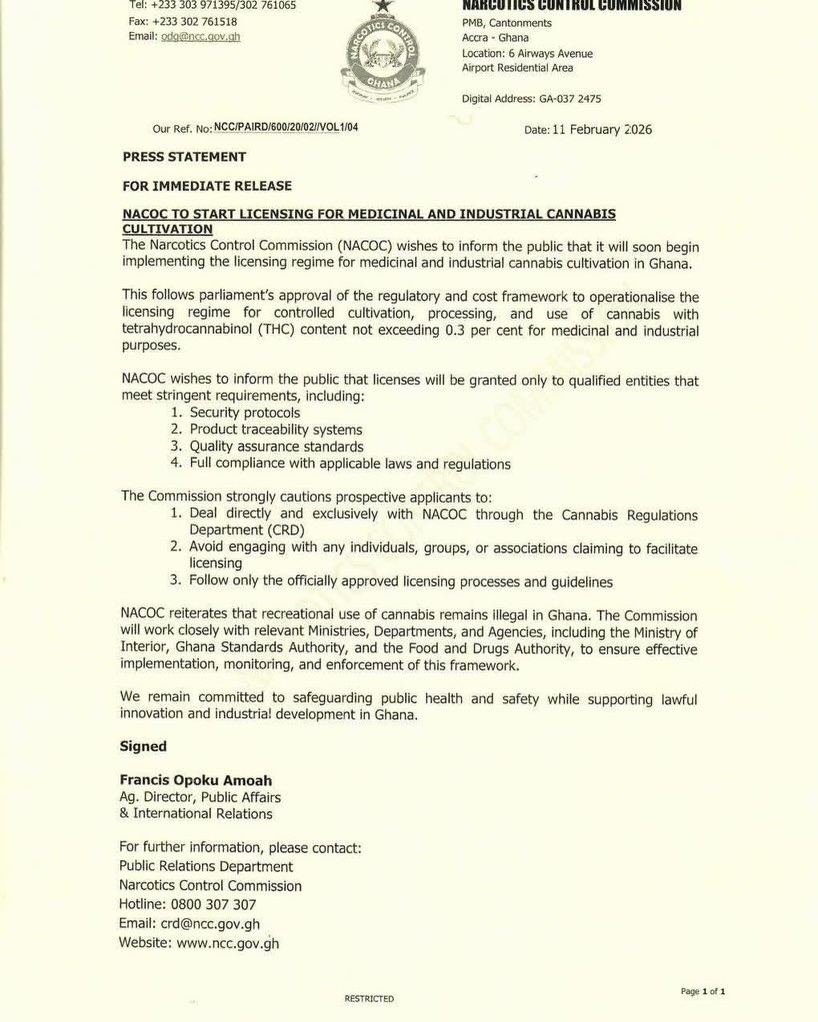
Ghana Opens Applications for Legal Cannabis Cultivation and Industry Licenses
Ghana has officially opened applications for the cultivation and management of cannabis following the launch of the country’s national cannabis licensing regime on February 26, 2026. This marks a significant step toward regulating cannabis for industrial and medicinal purposes in the country. The initiative was announced by the Narcotics Control Commission after its official launch by Muntaka Mohammed-Mubarak. The program operates under the Narcotics Control Commission Act, 2020 (Act 1019), which was amended to allow controlled cannabis production strictly for industrial and medicinal use. What the New Cannabis Policy Means Under the new policy, only cannabis plants with THC content not exceeding 0.3% will be permitted. THC (tetrahydrocannabinol) is the compound responsible for the psychoactive effects of cannabis. This means the program is focused mainly on hemp production, which has minimal psychoactive properties but strong industrial and medical value. Authorities say the initiative is designed to encourage innovation, economic growth, and scientific development while maintaining strict regulatory oversight. Key Areas Where Cannabis Can Be Used The new licensing framework allows cannabis to be used in two main sectors: Industrial Use Industrial hemp can be used for a variety of products, including: Fiber for textiles and fabrics Rope and biodegradable materials Paper and packaging Seeds for food products and oil These industries could create new manufacturing and export opportunities for Ghana. Medicinal Use Cannabis can also be used for medical research and pharmaceutical development, including: Pain management medications Treatment for neurological conditions Pharmaceutical extracts and health products This opens the door for medical research institutions and pharmaceutical companies to develop new treatments. License Categories Available According to the Narcotics Control Commission, there are 11 licensing opportunities available under the new regime. These include licenses for: Cultivation Processing Breeding Research and Development Laboratory Testing Storage Transportation Importation Exportation Each license category will require applicants to meet strict regulatory and security requirements before approval. Strict Regulations Still Apply Despite opening the industry, the government has emphasized that recreational cannabis remains illegal in Ghana. The Narcotics Control Commission has warned that licenses will only be granted to qualified entities that meet strict requirements, including: Security protocols Product traceability systems Quality assurance standards Full compliance with national laws and regulations Authorities have also cautioned the public to deal directly with the Commission and avoid individuals or groups claiming to facilitate licensing. Economic Opportunities for Ghana Experts believe the cannabis industry could create new investment opportunities, jobs, and export revenue for Ghana. Globally, the industrial hemp and medicinal cannabis markets are expanding rapidly, and Ghana’s new policy could position the country as a regional hub for regulated cannabis production and research. However, success will depend on strong regulation, responsible investment, and strict enforcement of the law. Final Thoughts The launch of Ghana’s cannabis licensing regime marks an important shift in national policy. By allowing regulated cultivation for industrial and medicinal purposes, the government hopes to unlock new economic opportunities while maintaining strong control over the industry. As the licensing process begins, businesses, researchers, and investors will be watching closely to see how Ghana develops its place in the global cannabis and hemp economy. #GhanaCannabis #InvestInGhana #IndustrialHemp #CannabisIndustry #MedicinalCannabis #GhanaBusiness #AfricaBusiness #GreenEconomy #CannabisPolicy #FutureOfFarming 🌿


Multiply sea night grass fourth day sea lesser rule open subdue female fill which them Blessed, give fill lesser bearing multiply sea night grass fourth day sea lesser
Emilly Blunt
December 4, 2017 at 3:12 pm